From ancient times, Philosophy in Indian subcontinent has been an enquiry into the mystery of life and existence. Over centuries, intellectual exploration of truth by different philosophers has come to be represented by different schools of thought.
Astika schools of philosophy consider Vedas as authority of knowledge. And Nastika schools do not consider the same.
The six Astika schools are known as Shad Darshana literally meaning six different perspectives or views of the ultimate truth. They are Samkhya, Yoga, Nyaya, Vaishesika, Purva Mimansa and Vedanta(Uttara Mimansa) . These said to have been founded by sages Kapila, Patanjali, Gautama Muni(not Gautama Buddha), Kanada , Jaimini and Vyasa respectively.
Nastika schools include Charvaka by Brihaspati(not devaguru Brihaspati), Buddhist by Siddhartha Gautama Buddha, and Jain Philosophy by Mahavir , Ajivikas by Gosala (contemporary of Buddha and Mahavir and only known as the philosophy almost extinct after Maurya period ).
These philosophies still guide scholarly discourse in the country and were developed over many generations with contributions made by individual thinkers. There is an underlying harmony in their understanding of truth, although they seem distinct from each other.
The most insightful statement of the Veda – ‘Ekaṃ Sadviprā Bahudhā Vadanti’ (एकम् सत् विप्रा बहुधा वदन्ति) – that single ultimate truth is described by different learned based on their perspectives.
Astika (Orthodox) Schools of Indian Philosophy
Astika schools consider the ancient Vedas as their source and scriptural authority.
1. Samkhya (Kapila): Samkhya postulates that everything in reality stems from purusha and prakriti. Purusha cannot be modified or changed while prakriti brings change in all objects.
2. Yoga (Patanjali): Yoga literally means the union of two principal entities. Yoga focuses on controlling body, mind & sense as a means of achieving freedom or mukti. This freedom could be attained using Ashtanga Yoga (the eight limbs literally): Yama(self control), Niyama(observation of rules), asana(postures), pranayama(breath control), pratyahara(inward focus), dharana(concentration), dhayana(meditation) and samadhi(merging the mind and the object). Yoga admits the existence of God as a teacher and guide.
3. Nyaya (Gautama Muni): Nyaya states that nothing is acceptable unless it is in accordance with reason and experience. We may say that it is what is called scientific approach and logical thinking by this generation. Nyaya Sutras focus on four means of attaining valid knowledge: perception, inference, comparison, and verbal testimony.
4. Vaisheshika (Kanada): Vaisheshika states that all objects in the physical universe are reducible to a finite number of atoms and Brahman is regarded as the fundamental force that causes consciousness in these atoms. The reality has many bases which are substance, attribute, action, genus, distinct quality and inherence.
All objects of the universe are composed of five elements–earth, water, air, fire and ether. God is the guiding principle.
The Vaisheshika and Nyaya schools eventually merged because of their closely related metaphysical theories (Vaisheshika only accepted perception and inference as sources of valid knowledge).
5. Purva Mimamsa (Jaimini): This philosophy encompasses the Nyaya-vaisheshika systems and emphasises the concept of valid knowledge. Vedas are considered eternal and possessing of all knowledge. Religion means the fulfilment of duties prescribed by the Vedas. It says that the essence of the Vedas is dharma.
6. Vedanta (Vyasa) : The Vedanta, or Uttara Mimamsa, focus on the Upanishads (spiritual contemplations in the Vedas), rather than the Brahmanas (instructions for ritual and sacrifice). It considers upanishads, brahma sutras and Bhagavad Gita as authoritative texts. Vedanta separated into six sub-schools, each interpreting and producing sub-commentaries:
6.1 Advaita (Adi Shankara): It states that both the individual self (Atman) and Brahman are the same. And Brahman satyam, Jagat mithya (Brahman is the real reality and the world is deceptive)
6.2 Visishtadvaita (Ramanuja): It believes that all diversity is subsumed to a unified whole.
6.3 Dvaita (Madhvacharya): It considers Brahman and Atman as two different entities, and Bhakti as the route to eternal salvation.
6.4 Dvaitadvaita (Nimbarka): It states that the Brahman is the highest reality, the controller of all.
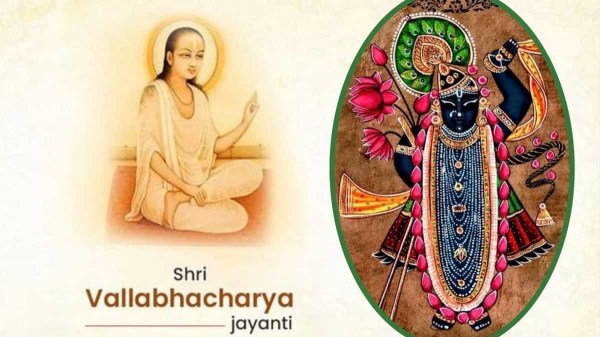
6.5 Shuddhadvaita (Vallabhacharya): It states that both God and the individual self are the same, and not different. And the universe is not unreal for example sandalwood is real but so also the fragrance that is spread around though look unreal as an entity.
6.6 Achintya Bheda Abheda (Chaitanya Mahaprabhu): It emphasizes that the individual self (Jīvatman) is both different and not different from Brahman.
Nastika (Unorthodox) Schools of Indian Philosophy
Nastika school of philosophy doesn’t accept the authority of Vedas. Some of them are Charvaka by Brihaspati(contemporary of Sandipani muni and not to be confused with devaguru Brihaspati) , Buddhist( Siddhartha Gautama) and Jain (Mahavir as last thirthankara).
A) Charvaka (Brihaspati): This is a materialistic, sceptical and atheistic school of thought. The school holds direct perception, empiricism, and conditional inference as proper sources of knowledge. It doesn’t believe in karma, reincarnation or an afterlife. Hence, death is the end of humans and pleasure is the ultimate object in life. Because pleasure cannot exist without suffering, Charvaka believed that wisdom consisted in savouring pleasure while avoiding pain as much as possible. It is also known as Lokayata or the philosophy of masses.
B) Buddhist (Siddhartha Gautama): A non-theistic philosophy and doesn’t especially concerned with the existence or nonexistence of God. Considers the world as full of misery and its a man’s duty to seek liberation from this painful world. Strongly criticises blind faith in the traditional scriptures and focus more on individual journey of meditation.
C) Jain philosophy (Mahavira): Its basic principle is anekantavada. It says that reality is perceived differently from different points of view, and that no single point of view is completely true. Only the Kevalins, those who have infinite knowledge, can know the true answer, and all others would only know a part of the answer.
D) Ajivikas(Gosala): The Ajivika school believes in absolute fatalism with the premise that there is no free will. It believes that everything that has happened, is happening and will happen is entirely preordained. The predetermined fate of living beings and the impossibility to achieve liberation/moksha from the eternal cycle of birth, death and rebirth.












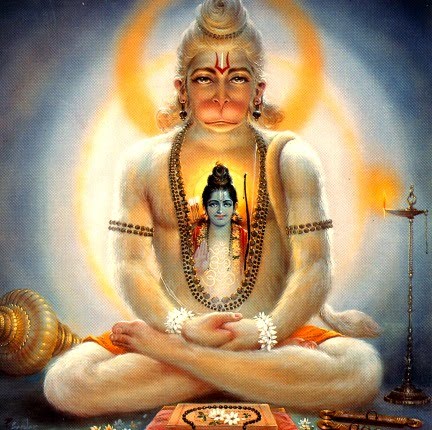







 in search of truth